- Get in Touch with Us

Last Updated: Aug 13, 2026 | Study Period: 2026-2032
Built from SEMI ind
Photoresist polymers form the film-building backbone of a resist. Molecular weight, dispersity, protection level, glass-transition behavior, developer interaction and trace-metal purity influence coating, exposure, dissolution, line-edge roughness and etch transfer. The chemistry changes with exposure wavelength. Novolac supports mature g-line and i-line systems, protected polyhydroxystyrene is important in KrF, and alicyclic acrylic copolymers provide the transparency needed at 193 nm.
| Polymer platform | Adoption | 2025 value | Commercial position |
|---|---|---|---|
| Novolac phenolic binder | High | $18-$45/kg | Stable mature-node, MEMS, display and thick-resist demand; pricing depends on metal purity and molecular distribution. |
| Protected PHS derivatives | High | $80-$220/kg | Core KrF and selected EUV CAR backbone with controlled protection and dissolution behavior. |
| ArF alicyclic (meth)acrylate | High | $180-$500/kg | High-purity 193 nm transparency, etch resistance and low defectivity support premium realization. |
| EUV organic CAR or molecular polymer | Emerging-High | $450-$1,200/kg | Highest qualification burden; value depends on stochastic control, sensitivity and LER. |
| Dry-film acrylic and epoxy systems | High | $10-$35/kg | Large-area PCB, IC substrate, packaging and MEMS use with lower value per kilogram. |
| Region | 2025 share | Indicative CAGR | Demand and ecosystem position |
|---|---|---|---|
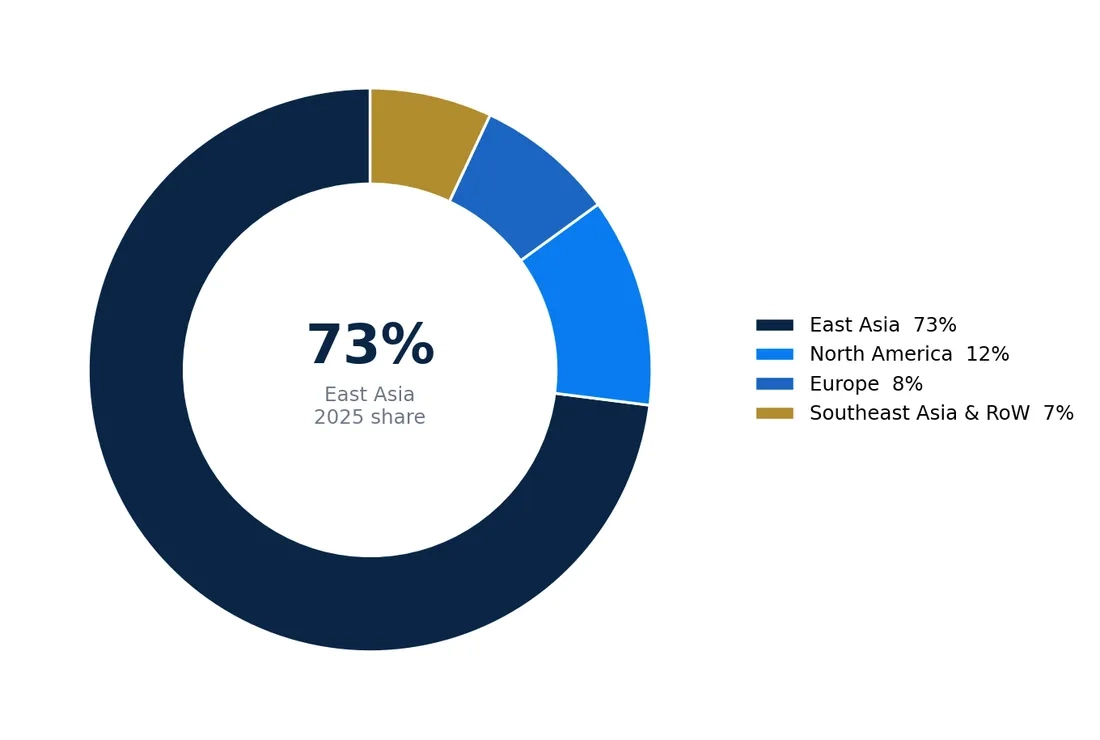
| East Asia | 73% | 10%-11% | Japan leads resist and polymer technology; Taiwan, Korea and China concentrate wafer, memory, display and PCB consumption. |
| North America | 12% | 10%-12% | Advanced logic, memory, R&D and new fab localization support qualified high-value polymer demand. |
| Europe | 8% | 8%-10% | Lithography research, automotive and power devices support specialty demand; PFAS redesign is a major development theme. |
| Southeast Asia and RoW | 7% | 11%-13% | Packaging, assembly, PCB and emerging fab investment drive growth from a smaller base. |
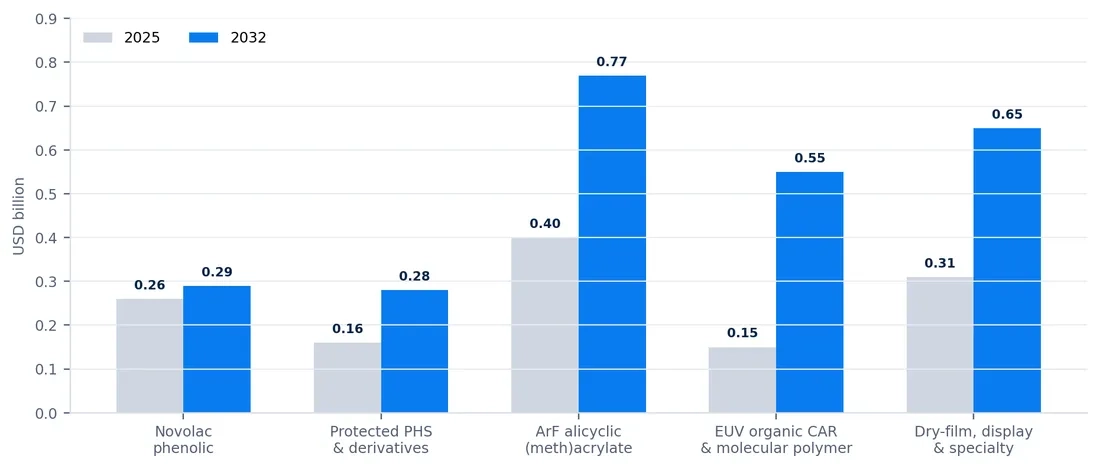
| Polymer platform | 2025 | 2032 | CAGR | Value proposition and demand direction |
|---|---|---|---|---|
| Novolac phenolic | $0.26B | $0.29B | 1.6% | Cost-effective mature lithography, thick resist, MEMS and display processes. |
| Protected PHS and derivatives | $0.16B | $0.28B | 8.3% | KrF scaling, 3D NAND layers and selected chemically amplified systems. |
| ArF alicyclic (meth)acrylate | $0.40B | $0.77B | 9.8% | 193 nm transparency, immersion compatibility and advanced multi-patterning. |
| EUV organic CAR and molecular polymer | $0.15B | $0.55B | 20.4% | High-value logic and DRAM patterning with strict stochastic-defect control. |
| Dry-film, display and specialty | $0.31B | $0.65B | 11.2% | IC substrates, RDL, MEMS, PCB, image sensors and permanent structures. |
| Supplier group | Key participants | Primary competitive position |
|---|---|---|
| Integrated resist formulators | JSR, TOK, Sumitomo, Shin-Etsu | Polymer design, captive synthesis, advanced-node qualification and close fab support. |
| Diversified electronic materials | Fujifilm, Qnity, Merck | Broad lithography portfolio, global manufacturing and packaging or ancillary integration. |
| Merchant polymer specialists | DIC, Mitsubishi Chemical | High-purity novolac, acrylic and custom polymer design for external formulators. |
| Specialty resist systems | Kayaku Advanced Materials, Allresist | MEMS, thick film, e-beam, epoxy and research-scale application depth. |
| Adjacent inorganic platforms | JSR Inpria and emerging MOR suppliers | Metal-oxide EUV performance creates substitution pressure on organic polymers. |
The market is technically concentrated. Major formulators often synthesize critical polymers internally, while merchant suppliers report photoresist polymers inside broader resin businesses. Competitive advantage rests on purity, reproducibility, customer qualification and rapid failure analysis.
| Segmentation | Coverage |
|---|---|
| By polymer type | Novolac phenolic; protected PHS; acrylic and methacrylate; epoxy; polyisoprene; molecular and other specialty polymers. |
| By exposure | Broadband; g-line; i-line; KrF 248 nm; ArF 193 nm dry and immersion; EUV 13.5 nm; e-beam. |
| By tone and form | Positive; negative; chemically amplified; non-chemically amplified; liquid; dry film; permanent film. |
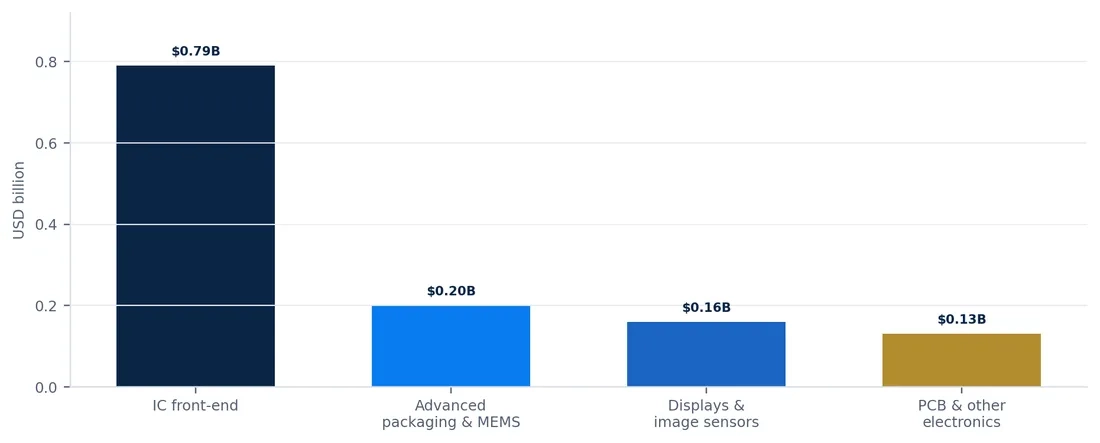
| By application | IC front end; advanced packaging; MEMS; displays and image sensors; PCB and IC substrates; photomasks. |
| By geography | East Asia; North America; Europe; Southeast Asia; Rest of world. |
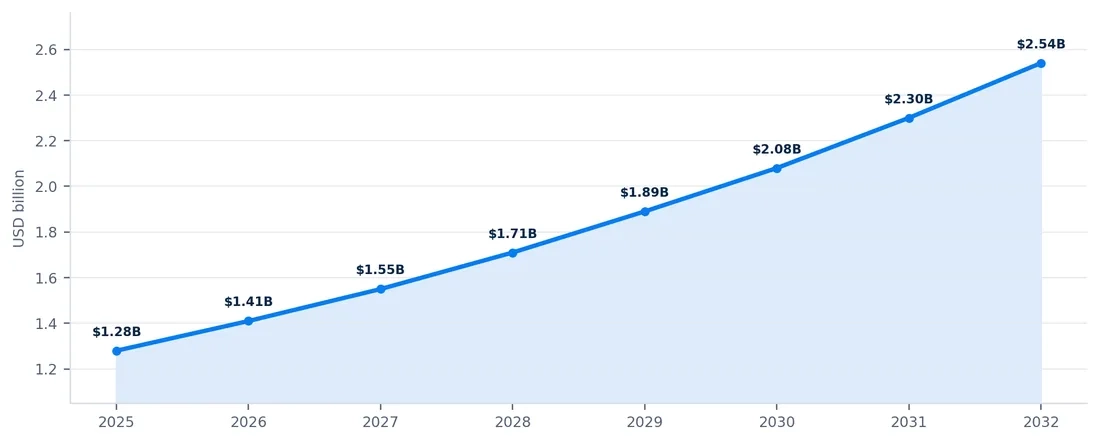
The estimate uses a top-down and bottom-up reconciliation. SEMI's broader photoresist outlook establishes the formulated market boundary. A polymer-value factor is then applied by chemistry and application, reflecting the binder share of solids, vertical integration, purification, yield, qualification and formulation value. The result is tested against regional wafer capacity, materials consumption, supplier expansion and product portfolios.
Forecast growth varies by platform. EUV organic CAR polymers receive the highest rate, followed by dry-film and specialty systems, ArF polymers and protected PHS.
Mature novolac grows slowly. Non-polymeric MOR revenue is excluded and treated as a competitive scenario. All values are calibrated estimates because no major supplier separately reports photoresist polymer revenue.
| Measure | Confidence | Reason |
|---|---|---|
| Headline 2025 value | Medium | Anchored to SEMI photoresist data, then adjusted for polymer content and vertical integration. |
| 2025-2032 direction | Medium-High | Fab growth, advanced-resist mix, EUV shipments and packaging demand are visible. |
| Regional shares | Medium-High | SEMI reports regional materials use and wafer-capacity concentration. |
| Company shares | Medium | Critical polymers are captive and revenue is embedded inside broader business segments. |
| Platform mix | Medium | Chemistry and exposure portfolios are clear, but suppliers do not disclose resin-level sales. |
Photoresist polymers are a small but strategically critical material pool. Growth is led by EUV, ArF and advanced packaging, while mature novolac remains important for installed processes. Winning suppliers will combine polymer control with purification, formulation data and fab-level problem solving. They must also prepare for PFAS redesign and selective competition from metal-oxide resists.
| Sr No | Topic |
|---|---|
| 1 | Market Segmentation |
| 2 | Scope of the report |
| 3 | Research Methodology |
| 4 | Executive summary |
| 5 | Key Predictions of Photoresist Polymers Market |
| 6 | Avg B2B price of Photoresist Polymers Market |
| 7 | Major Drivers For Photoresist Polymers Market |
| 8 | Global Photoresist Polymers Market Production Footprint - 2025 |
| 9 | Technology Developments In Photoresist Polymers Market |
| 10 | New Product Development In Photoresist Polymers Market |
| 11 | Research focuses on new Photoresist Polymers |
| 12 | Key Trends in the Photoresist Polymers Market |
| 13 | Major changes expected in Photoresist Polymers Market |
| 14 | Incentives by the government for Photoresist Polymers Market |
| 15 | Private investments and their impact on Photoresist Polymers Market |
| 16 | Market Size, Dynamics, And Forecast, By Type, 2026-2032 |
| 17 | Market Size, Dynamics And Forecast, By Output, 2026-2032 |
| 18 | Market Size, Dynamics, And Forecast, By End User, 2026-2032 |
| 19 | Competitive Landscape Of Photoresist Polymers Market |
| 20 | Mergers and Acquisitions |
| 21 | Competitive Landscape |
| 22 | Growth strategy of leading players |
| 23 | Market share of vendors, 2025 |
| 24 | Company Profiles |
| 25 | Unmet needs and opportunities for new suppliers |
| 26 | Conclusion |


© 2017-2026 Mobility Foresights Pvt Ltd. All rights reserved.
Developed with by ClousTech

