- Get in Touch with Us

Last Updated: Apr 26, 2025 | Study Period: 2024-2030
South Korea is one of the fastest growing markets for cardiovascular medical devices. The latest research shows that the demand for cardiac care procedures is increasing in Korea, due to the rising prevalence of cardiovascular diseases.
This, in turn, has propelled the growth of the cardiovascular medical devices market in the country. South Korea is known for its advance in medical technology and educational healthcare system, both of which have empowered and enabled it to lead the way in cardiovascular care.
Cardiovascular medical devices such as pacemakers, defibrillators, pacemaker analyzers, and pacemaker stimulators are common in South Korean hospitals. The availability of such products is increasing, as the South Korean government actively promotes medical technology to its citizens.
Additionally, the country boasts of well-developed healthcare infrastructure and physicians who are experienced in using such devices in clinical practice.
As a result, South Korean hospitals are tapping the potential of cardiovascular medical device manufacturers to offer advanced cardiac treatments and interventions to patients.
Furthermore, the South Korean government has been providing subsidies and tax incentives to local manufacturers, which has led to a competitive market and more wide-spread adoption of cardiovascular medical devices.
Meanwhile, players in the market are focusing on product innovation and localization to drive the industry growth forward. South Korea remains a powerhouse in the medical device industry, offering several advantages to local and global players alike.
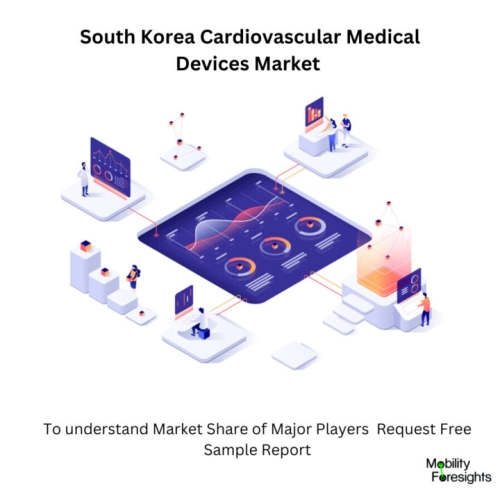
The South Korea Cardiovascular Medical Devices market accounted for $XX Billion in 2023 and is anticipated to reach $XX Billion by 2030, registering a CAGR of XX% from 2024 to 2030.
The personal ECG device developed by medical AI company VUNO has been approved by the Ministry of Food and Drug Safety in South Korea. The portable medical equipment, known as Hatti Pro, only takes the user's pulse rate and transmits the information to a linked mobile app. VUNO has been providing physicians and healthcare facilities with a variety of medical AI solutions.
With the most recent government certification, VUNO may now move closer to providing customers with AI medical equipment. Based on ECG data, which the company says has "high potential as a biomarker for various cardiovascular diseases," VUNO is expanding its medical AI business.
With the MFDS clearance in hand, the business is gearing ready to introduce its integrated health management brand, Hatti, with AI-powered home medical devices that assist in the early detection of chronic illnesses and everyday health management for consumers. Due to an ageing population, cardiovascular diseases (CVDs) are becoming more common in South Korea, where they rank second only to cancer in terms of cause of death.
They will do their hardest to lower cardiovascular disease mortality through our ECG data-based medical AI initiative and to support preventive therapy, which is the way that healthcare will go in the future. VUNO intends to introduce further AI-powered home medical devices in the future that can identify serious cardiac conditions.
To sell its AI medical solutions in South Korea and the rest of Asia-Pacific, VUNO has been obtaining regulatory clearances in recent months. For the exact assessment and screening of lung disorders, VUNO was able to obtain the government of South Korea's permission for VUNO Med Lung Quant, an AI-based lung CT quantification system. Additionally, it was granted MFDS clearance last year for VUNO Med Deep CARS, a medical device that analyses a person's risk of cardiac arrest using AI.
| Sl no | Topic |
| 1 | Market Segmentation |
| 2 | Scope of the report |
| 3 | Abbreviations |
| 4 | Research Methodology |
| 5 | Executive Summary |
| 6 | Introduction |
| 7 | Insights from Industry stakeholders |
| 8 | Cost breakdown of Product by sub-components and average profit margin |
| 9 | Disruptive innovation in the Industry |
| 10 | Technology trends in the Industry |
| 11 | Consumer trends in the industry |
| 12 | Recent Production Milestones |
| 13 | Component Manufacturing in US, EU and China |
| 14 | COVID-19 impact on overall market |
| 15 | COVID-19 impact on Production of components |
| 16 | COVID-19 impact on Point of sale |
| 17 | Market Segmentation, Dynamics and Forecast by Geography, 2024-2030 |
| 18 | Market Segmentation, Dynamics and Forecast by Product Type, 2024-2030 |
| 19 | Market Segmentation, Dynamics and Forecast by Application, 2024-2030 |
| 20 | Market Segmentation, Dynamics and Forecast by End use, 2024-2030 |
| 21 | Product installation rate by OEM, 2023 |
| 22 | Incline/Decline in Average B-2-B selling price in past 5 years |
| 23 | Competition from substitute products |
| 24 | Gross margin and average profitability of suppliers |
| 25 | New product development in past 12 months |
| 26 | M&A in past 12 months |
| 27 | Growth strategy of leading players |
| 28 | Market share of vendors, 2023 |
| 29 | Company Profiles |
| 30 | Unmet needs and opportunity for new suppliers |
| 31 | Conclusion |
| 32 | Appendix |




© 2017-2026 Mobility Foresights Pvt Ltd. All rights reserved.
Developed with by ClousTech