
- Get in Touch with Us

Last Updated: Apr 25, 2025 | Study Period: 2024-2030
The automotive industry's new heroes are electric vehicles. Customers benefit from financial savings, less emissions, comfort, and numerous other benefits. Telematics are also needed for EVs, though, to enhance the driving and riding experience.
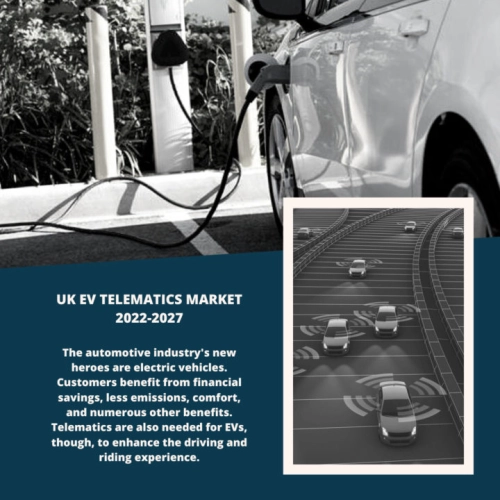
The ability to send notifications to charging stations, get constant charging updates, and communicate with the grid are some of the advantages of EV telematics.
The key benefits of electric vehicles are their low cost of ownership, low cost of maintenance, and superior environmental performance. Running an EV for a short distance on electricity is significantly less expensive than running a gasoline vehicle for the same distance. lowering of emissions.
Managers can receive notifications from EV telematics sensors regarding problematic components or tyres that are at risk of failure. Fleet managers can benefit from predictive service and maintenance savings by scheduling maintenance, which guarantees that EV-specialist personnel and parts are available when needed.
The UK EV Telematics Market accounted for $XX Billion in 2021 and is anticipated to reach $XX Billion by 2026, registering a CAGR of XX% from 2024 to 2030.
The largest telematics service provider in the world, Cambridge Mobile Telematics, will present a keynote address at the Insurance Institute for Highway Safety Charging Into an Electrified Future
Conference today to discuss its most recent research into the driving risks associated with conventional, hybrid, and electric vehicles. The subject of how this risk affects safety and, ultimately, accident outcomes will be addressed by CMT in the keynote.
The CMT DriveWell Platform's millions of vehicles provided the research's data. The main topic of CMT's presentation will be how the insurance sector and experts in traffic safety may further cut risk by rewarding safe driving among users of electric vehicles.
A deeper understanding of the risk factors that affect safety outcomes is the key to lowering risk for EV drivers.
| Sl no | Topic |
| 1 | Market Segmentation |
| 2 | Scope of the report |
| 3 | Abbreviations |
| 4 | Research Methodology |
| 5 | Executive Summary |
| 6 | Introduction |
| 7 | Insights from Industry stakeholders |
| 8 | Cost breakdown of Product by sub-components and average profit margin |
| 9 | Disruptive innovation in the Industry |
| 10 | Technology trends in the Industry |
| 11 | Consumer trends in the industry |
| 12 | Recent Production Milestones |
| 13 | Component Manufacturing in US, EU and China |
| 14 | COVID-19 impact on overall market |
| 15 | COVID-19 impact on Production of components |
| 16 | COVID-19 impact on Point of sale |
| 17 | Market Segmentation, Dynamics and Forecast by Geography, 2024-2030 |
| 18 | Market Segmentation, Dynamics and Forecast by Product Type, 2024-2030 |
| 19 | Market Segmentation, Dynamics and Forecast by Application, 2024-2030 |
| 20 | Market Segmentation, Dynamics and Forecast by End use, 2024-2030 |
| 21 | Product installation rate by OEM, 2023 |
| 22 | Incline/Decline in Average B-2-B selling price in past 5 years |
| 23 | Competition from substitute products |
| 24 | Gross margin and average profitability of suppliers |
| 25 | New product development in past 12 months |
| 26 | M&A in past 12 months |
| 27 | Growth strategy of leading players |
| 28 | Market share of vendors, 2023 |
| 29 | Company Profiles |
| 30 | Unmet needs and opportunity for new suppliers |
| 31 | Conclusion |
| 32 | Appendix |


© 2017-2026 Mobility Foresights Pvt Ltd. All rights reserved.
Developed with by ClousTech